
Where Do Coffee Beans Grow? | The Journey Behind Every Cup
Coffee is one of the great simple pleasures in life. The rich aromas can gear you up to take on the world or help you unwind after a long day. But have you ever wondered where the beans that go into every delicious cup come from?
The coffee industry is one of the largest in the world, generating tens of billions of dollars annually. Surprisingly, these little beans require very specific growing conditions to thrive. Let’s take a closer look at where coffee beans grow so you can better appreciate what goes into your brew the next time you enjoy a cup of coffee.
Where Do Coffee Beans Grow?
When it comes to coffee production, most of the world’s coffee beans are grown in a region known as the Coffee Bean Belt, or simply the Bean Belt.
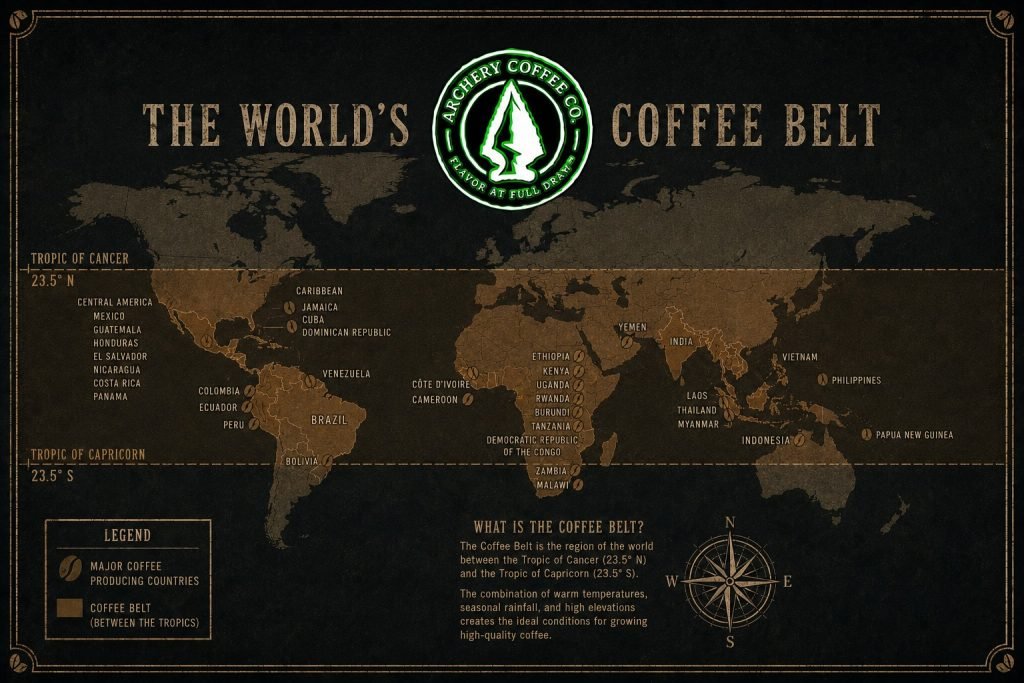
The Bean Belt is a band that circles the globe near the equator, located between the Tropic of Cancer and the Tropic of Capricorn. This region includes parts of:
- Central America
- South America
- Africa
- Southeast Asia
- The Pacific Islands
Coffee Production in the America
In the Americas, Brazil is the world’s largest coffee producer. Other major coffee-growing countries include:
- Colombia
- Honduras
- Peru
- Costa Rica
Coffee Production in Asia
These countries produce millions of pounds of coffee each year and are known for growing some of the world’s most popular Arabica coffee beans.
Across the globe, Vietnam ranks as the second-largest coffee producer in the world. Other notable coffee-growing nations include:
- Indonesia
- India
These regions are especially known for producing Robusta coffee beans, which are prized for their bold flavor and higher caffeine content.
Coffee Production in Africa
Africa is widely recognized as the birthplace of coffee. Some of the continent’s largest coffee-producing countries include:
- Ethiopia
- Uganda
- Kenya
African coffees are often celebrated for their bright acidity, floral aromas, and complex flavor profiles.
But what makes the Bean Belt such an ideal place to grow coffee? The answer lies in both the climate and the coffee plant itself.
Why Do Coffee Beans Need a Tropical Climate?
Even a single freeze can destroy an entire crop, resulting in substantial losses for coffee farmers. Fortunately, regions near the equator rarely experience freezing temperatures.
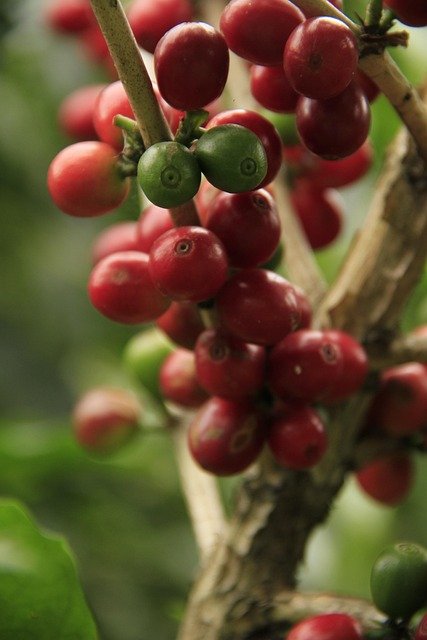
Many people are surprised to learn that coffee beans don’t actually grow as beans. Coffee plants are tropical evergreen shrubs or small trees that produce fruit known as coffee cherries.
Inside each cherry are the seeds that eventually become the coffee beans we roast and brew.
Coffee plants are highly sensitive and require a very specific environment to flourish. They thrive in areas with:
- Consistent warmth
- High humidity
- Ample rainfall
- Rich, nutrient-dense soil
Ideal Coffee Growing Temperatures
Coffee plants prefer temperatures between 64°F and 79°F.
While they are vulnerable to cold weather, they can also experience heat stress when temperatures consistently exceed 86°F. This balance makes tropical climates within the Bean Belt ideal for coffee cultivation.
The Importance Of Wet And Dry Seasons
The seasonal weather patterns found throughout the Bean Belt create the perfect environment for coffee farming.
During the wet season:
-
- Coffee plants experience rapid growth.
-
- New leaves and branches develop.
During the dry season:
-
- Coffee plants flower.
-
- Cherries begin to develop and ripen.
Both seasons are essential for producing healthy coffee cherries and high-quality beans.
Why Elevation Matters
Many of the world’s best coffees are grown at higher elevations.
Mountainous coffee-growing regions often provide:
-
- Cooler temperatures
-
- Rich volcanic soil
-
- Slower cherry development
Because the cherries ripen more slowly, sugars have more time to concentrate within the fruit. This often results in coffee beans with more complex flavors and greater sweetness.
Together, these factors make the Bean Belt one of the most productive agricultural regions on Earth for coffee production.
Can Coffee Beans Grow in the United States?
One common question is whether coffee beans can be grown in the United States.
The answer is yes—but only in a few select regions.
Coffee Production In Hawaii
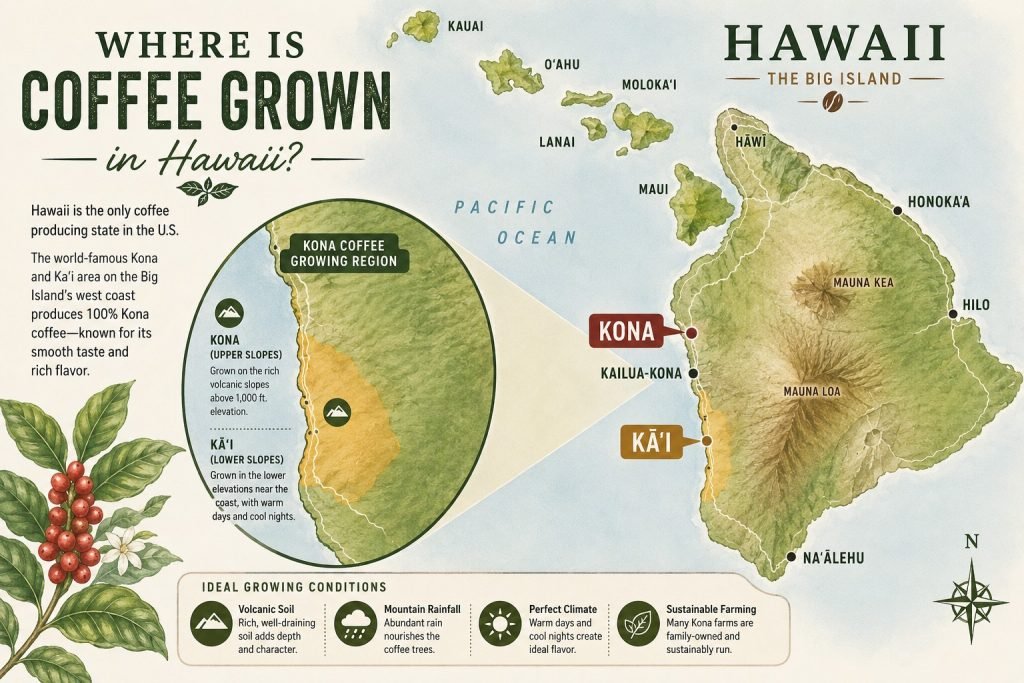
Hawaii is by far the largest coffee-producing state in the U.S., and Hawaiian coffee is often regarded as some of the highest-quality coffee produced in the United States.
Regions such as Kona and Ka’u offer ideal conditions for coffee cultivation, such as, volcanic soil, consistent temperatures and adequate rainfall.
Coffee Production in Puerto Rico
Puerto Rico also produces coffee on a larger scale than many people realize. Although it is a U.S. territory rather than a state, its tropical climate makes it well-suited for coffee farming.
Despite these domestic producers, approximately 99% of the coffee consumed in the United States is imported from coffee-growing regions near the equator.
Do Different Types of Coffee Beans Require Different Growing Conditions?
Yes. Different coffee varieties thrive under different environmental conditions.
Arabica Coffee
Arabica coffee is the most popular coffee type in the world.
Arabica plants typically grow at elevations between 600 and 2,000 meters and prefer cooler climates, rich volcanic soil, consistent moisture, and partial shade.
Because Arabica plants are more delicate and susceptible to disease, they generally perform best at higher elevations.
Arabica beans are often known for producing coffee that is:
-
- Smooth
-
- Aromatic
-
- Slightly acidic
- Full-bodied
Robusta Coffee Beans
As the name suggests, Robusta coffee plants are much more resilient.
Robusta beans grows best at elevations between 200 and 800 meters and thrive in areas with warmer temperatures, higher humidity, and lower-quality soils.
Robusta plants are more resistant to disease, pests, and harsh weather conditions.
Robusta beans typically produce coffee that is stronger, bolder and higher in caffeine.
Excelsa and Liberica Coffee Beans
Though not as widely consumed as Arabica and Robusta, Excelsa and Liberica are unique coffee varieties that flourish in tropical regions such as West Africa, as well as the Philippines. These beans tend to grow best in high humidity, warm temperatures and in areas with consistent rainfall.
Excelsa and Liberica flavor profiles are often described as:
- Fruity
- Smoky
- Bold
- Complex
From Bean To Beverage
Understanding where coffee beans grow gives you a deeper appreciation for every cup you drink.
From the volcanic mountains of Hawaii to the highlands of Ethiopia and the vast coffee farms of Brazil, coffee beans often travel thousands of miles before reaching your mug. Every sip represents the hard work of farmers, ideal growing conditions, and a carefully managed process that transforms a simple coffee cherry into one of the world’s favorite beverages.
Experience Premium Coffee from Archery Coffee
At Archery Coffee, we’re proud to offer premium, slow-roasted coffee sourced directly from exceptional farms and roasted to perfection.
Every blend is crafted to deliver a smooth, balanced, full-bodied flavor that coffee lovers can appreciate. Better yet, a portion of every purchase helps support archery and outdoor education programs that teach and promote life in the great outdoors.
If you’re looking for coffee for hunters and those that love archery and spending time in nature, fill your cup with coffee crafted for outdoor enthusiasts, only from Archery Coffee.