Go Juice! | How Much Caffeine Is In Coffee?
If you’re anything like us, a nice hot (or cold) cup of coffee is one of life’s greatest pleasures. Not only does coffee taste great, but it also helps perk you up and give you the energy you need to get through the day.
But, despite that extra oomph that a cup of coffee can provide, did you know that not all varieties have the same amount of caffeine? That’s right, if you’ve noticed your afternoon brew isn’t packing enough of a punch, it may be due to the type of coffee beans you’ve used.
But don’t worry, we’ve made this guide that shows you the caffeine content in the most popular coffee beans, so you know what to expect next time you reach for your favorite blend.
Why Do Coffee Beans Have Different Amounts Of Caffeine?
When you think of coffee, you usually expect it to have caffeine. In fact, a lot of people drink it just to get a bit of energy when they need it. But, knowing your coffee has caffeine and knowing how much are two different things.
The question is, “Why don’t all coffee beans have the same amount of caffeine?” Well, there’s a few different reasons, so let’s break it down.
- The type of bean – The bean type plays a big role in how much caffeine ends up in your coffee. There’s two main types of coffee beans – Arabica, which gives a smoother finish, and Robusta, a favorite for instant coffee and espresso. As you can imagine, Robusta packs more of a punch, with almost double the amount of caffeine as Arabica blends.
- Where it’s grown – Did you know that where a coffee bean is grown can impact how much caffeine it has? When grown at higher altitudes, coffee beans often have less caffeine, while the ones grown at lower altitudes tend to have more environmental stressors that lead to higher caffeine levels.
- How it’s roasted – The way a coffee bean is roasted may impact its caffeine content. Lighter roasts can have higher caffeine than darker roasts, but that’s not always the case.
- How you brew it – Finally, the last thing that plays a part in a coffee bean’s caffeine level is how it’s brewed. If you use a longer brewing method like a French Press or drip, your drink can have a higher caffeine content. Up to 80% of the caffeine is released in the first 60 seconds after you add water, and by the 2 to 4 minute mark, almost all of the caffeine is extracted from the bean.
Okay, now that you know the why of your coffee’s caffeine levels, let’s get into the good stuff—the how much. In this next section, we’ll go over the caffeine levels for the most popular types of coffee beans and recommend some tasty blends, so you can choose the one that’s sure to give you the pickup you need.
Arabica Beans
As we briefly covered above, Arabica beans have a lower caffeine content, which is why they’re a great choice for both hot and cold drinks.
The typical amount of caffeine in an 8-ounce cup of Arabica coffee is around 80 to 100 mg. But, the way you brew it plays a pretty big role in the total caffeine level. For example, if you’re using a pour-over, that same 8-ounce cup will have about 175 mg of caffeine, while an espresso is only around 60 to 70 mg. If you want even more of a kick, cold brew your Arabica beans to get between 200 and 280 mg of caffeine. If you’ve reached your caffeine levels for the day or want a calming and cozy cup of coffee at night that won’t keep you up, there’s also decaf Arabica beans. Blends that use these grounds have about 2 to 9 mg of caffeine, which isn’t enough for your body to be noticeably affected.
Robusta Beans
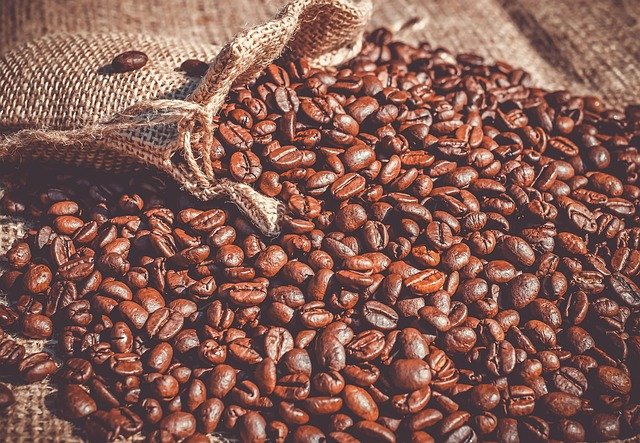
Robusta coffee beans have more caffeine than their arabica bean counterparts.
While Arabica beans are known for their smoothness, Robusta are bold and pack quite the caffeinated punch. Robusta beans have about 50% more caffeine than Arabica, which, interestingly, makes the plant much hardier and a natural pest repellent. But how much caffeine do these potent little beans have? Well, one 8-ounce cup of Robusta can range from 80 mg of caffeine to a whopping 265 mg, depending on how it’s brewed. A drip press delivers 150 to 200 mg, while a French Press contains 140 to 250 mg. Espresso is the least caffeinated option, with around 140-150 mg per 1-ounce shot. However, just like the Arabica beans, cold brewing is the best way to get the highest caffeine levels, with an 8-ounce glass totaling 200 to 300+ mg.
Honorable Mentions
While Arabica and Robusta beans are the most popular choices for many coffee blends, they’re not the only options. Liberica and Excelsa are rare, but can be used in signature blends. Liberica beans are a great option for people who are more sensitive to caffeine but still want a little pick-me-up. An 8-ounce cup of Liberica has only 40 to 60 mg of caffeine and delivers a smooth, nutty flavor. Excelsa, which has recently been reclassified as a variety of Liberica, is another low caffeine option with about 86 to 113 mg in an 8-ounce cup. These beans are fruitier and more tart, with an earthy undertone.
Choosing The Best Bean For Your Desired Caffeine Level
To get the right amount of caffeine, you’ll of course want to pick the right blend. A strong dark roast can keep you fueled for late nights or early mornings, while a light roast is great for mornings and a midday refresher. There’s also specialty blends with extra caffeine for when you need it most. So, choose the coffee made from the bean that’s going to have the right amount of caffeine for you.
Archery Coffee is proud to offer the finest slow-roast coffee made from top-quality beans. Each blend is sourced farm direct and always roasted to perfection, so you can enjoy a smooth, delicious cup of coffee at home or on the go. A portion of every purchase is donated to outdoor and archery education programs, so you can feel good about every sip. For a coffee as tough as you, reach for Archery Coffee!